The first time I saw a “minor” car accident turn into a life-altering case, it involved a low-speed rear-end collision outside a coffee shop on El Dorado Hills Boulevard. No airbags deployed, both cars drove away, and the driver apologized. My client texted his wife, “I’m fine,” and went to work. By the weekend, he couldn’t sleep through the night. Neck stiffness hardened into nerve pain shooting down his arm. He chalked it up to stress, then to age. Two months later, an MRI showed a cervical disc herniation, and he was scheduling injections to manage pain that still bothers him years later.
If you practice long enough as a car accident lawyer, you learn to respect “minor” injuries. They hide in plain sight, especially in communities like El Dorado Hills, where people are active, pressed for time, and reluctant to make a fuss. The stakes are not just medical. Latent injuries collide with insurance skepticism, confusing claim processes, and the local realities of commuting from EDH to Folsom, Sacramento, or Placerville. By the time people realize they need help, the early choices they made at the scene can shape, and sometimes shrink, the value of their claim.
From a seasoned EDH car accident attorney perspective, here is what actually matters when minor injuries refuse to stay minor.
Why small crashes create big problems
Low-speed crashes are deceptive. Modern vehicles are engineered to protect occupants, which is good, but cosmetics hide the physics. Bumpers bounce back. Panels flex. Meanwhile, the human body does not have crumple zones. Soft tissues around the spine, especially the cervical and lumbar regions, take the load. When force transfers through the body, inflammation may smolder for days. Adrenaline masks pain in the moment, and daily life keeps moving.
When you add in common factors in this area, the problem compounds. Short errands for school pickup on Serrano Parkway, quick runs to the Raley’s center, the morning drop from El Dorado Hills Town Center to Highway 50 at 7:45 a.m. Minor collisions happen at turns, yield signs, and parking lots. They are polite, awkward encounters, not dramatic events. People exchange information and say they are okay, then discover a week later that they are not.
The law does not penalize you for feeling fine at the scene. It does, however, require evidence that connects your symptoms to the crash. That is where small mistakes hurt big claims.
The early record tells the later story
The first 48 to 72 hours after any crash, even a parking-lot tap, create the backbone of your case. Not because the law demands magic words, but because insurance adjusters, defense lawyers, and juries look for a clean arc: incident, evaluation, treatment. Gaps and ambiguities invite alternative explanations that have nothing to do with you and everything to do with reducing payout.
Think about documentation in layers. Photographs show context and severity beyond what a repair invoice reveals. A short note to your primary care physician, urgent care visit, or even a telehealth record logs the onset of symptoms and medical advice. If you are a weekend cyclist who rides Salmon Falls Road, or you lift at the gym near the lake, write down how the pain changes those routines. Real life details matter. They become credible anchors for damages later.
A simple truth from my files: the sooner a client documents, the fewer arguments we fight months down the line.
Pain that lingers, patterns that repeat
“Whiplash” has become a punchline in some circles, and that bias still seeps into claims. In practice, the range of minor-to-moderate injuries from low-speed collisions is real and measurable. Cervical and lumbar strains with myofascial trigger points, facet joint irritation, sacroiliac joint dysfunction, and aggravation of preexisting degenerative disc disease appear frequently in scans and notes. Headaches show up two days later. Dizziness and sleep disturbance extend the recovery. A small percentage develop chronic pain syndromes that resist the usual path of rest and physical therapy.
Attention to pattern helps. Clients who sit at a computer all day often report mid-back tightness that progresses by afternoon, with tingling in fingers by evening. Parents who carpool kids to Vista del Lago or Oak Ridge find that looking over the shoulder during lane changes triggers pain spikes. Restaurant servers and health care workers on their feet cannot pace their work to the recovery plan, so they flare.
When an EDH car accident attorney builds a claim for these injuries, the tools are not exotic. We collect work schedules, show canceled activities, and gather consistent therapy notes over time. I would much rather have twelve weeks of careful documentation for a modest injury than a single dramatic ER visit with no follow-up. The former tells an honest story the law respects.
The El Dorado Hills wrinkle: local routes, local resources
Location shapes claims in subtle ways. El Dorado Hills straddles suburban rhythm and foothill geography. Distances are short, but medical access can be uneven depending on timing. People choose between urgent care in Folsom, primary care in El Dorado Hills, imaging in Placerville or Roseville, and specialists in Sacramento. That spread introduces delays. If you wait two weeks for a referral slot, an adjuster will say you must not have been that hurt. We know the bottlenecks and plan around them.
Traffic patterns matter too. Highway 50 merges and exits create classic sideswipe and rear-end exposures. Serrano’s winding roads lead to visibility issues at intersections. Parking lot collisions around Town Center occur at low speeds with soft-tissue outcomes. Each mechanism of injury carries a distinct profile. We pair that with biomechanical insight and medical notes to make causation harder to dismiss.
Insurance doesn’t hate you, it just doesn’t know you
Adjusters follow scripts and software. When the property damage is low and the medical spend modest, algorithms predict minor injury. The software outputs a number range. Adjusters test your patience inside that band. Without evidence to push against those assumptions, your case stays inside the preset range even if your life says otherwise.
An experienced car accident https://johnnycxew925.timeforchangecounselling.com/the-importance-of-timely-action-after-a-car-accident-insights-from-moseley-collins-law lawyer speaks the insurer’s dialect without letting it dictate value. The work includes verifying policy limits, finding all coverages, and extracting admissions from the other side early. If we learn that the at-fault driver was on a delivery run or driving a company car, commercial coverage enters the scene with different dynamics. If the at-fault party’s liability limits are low, we pivot to underinsured motorist coverage you may carry. Many EDH families have robust UM/UIM and MedPay, but those benefits hide in policy language until someone pulls the right thread.
Common mistakes that shrink valid claims
You can do a lot right and still leave money on the table simply by following habits that feel reasonable. These are the patterns I see most often:
- Saying “I’m fine” at the scene, then waiting weeks to seek care, which insurers frame as a break in causation. Using only chiropractic care for months without a primary care visit, imaging, or a formal diagnosis to explain persistent pain. Dismissing mild concussion signs like brain fog and irritability, then struggling at work with no record to connect the dots. Letting the body shop or the other driver’s insurer guide the entire process, including recorded statements about injuries. Returning to high-intensity workouts too soon, flaring symptoms, and confusing the medical timeline.
Every one of these is fixable if addressed early. The earlier we get involved, the cleaner the path.
The medical arc that makes sense to a jury
Not every case goes to trial. In fact, most do not. But the threat of trial, and the story we would tell if we had to, influences every negotiation. The best medical arc contains four traits:
First, prompt initial evaluation, even if symptoms are light. Second, consistent follow-up that reflects real life, not a protocol pasted from the internet. Third, incremental escalation if symptoms persist, like adding imaging, injections, or specialist review at reasonable intervals. Fourth, a defined end point or a well-supported explanation of ongoing limitations.
This does not mean you should race to get an MRI on day two or demand a pain management referral after one week. Over-medicalizing hurts credibility. The sweet spot is careful, proportional care documented in real time, with language doctors understand and insurers cannot easily twist.
Lost time, lost wages, lost margins
One of the most underrated impacts of minor injuries is time loss. Maybe you do not miss entire days. You leave early for physical therapy. You take longer to drive because turning your neck hurts. You split shifts because of back spasms midway through. Hourly workers feel this immediately. Salaried professionals feel it in performance reviews and bonus calculations months later.
California law allows recovery for lost earnings and lost earning capacity. The second category matters when your symptoms reduce your future work efficiency even if you kept your job. That requires thoughtful proof: calendars, supervisor emails, production numbers, physician notes linking limitations to tasks. I have seen a server’s claim hinge on the number of tables per hour before and after, and a software engineer’s damages supported by keyboard time data and a manager’s memo about reduced sprint velocity. None of that is dramatic, but it sways an adjuster who would otherwise default to “no wage loss.”
Preexisting conditions are not your enemy
A common refrain from insurers is that your pain flows from degenerative changes that existed before the crash. Of course it does, at least in part. Most people over 30 show some spinal degeneration on imaging. The legal question is not whether prior wear exists, but whether the collision aggravated it and to what degree.
California follows the eggshell plaintiff rule. You take the victim as you find them. If a low-speed impact amplifies a quiet condition into symptomatic pain, the at-fault driver remains responsible for the aggravation. The fight is about proportion and duration. Good records from before the crash help. So does candid testimony. Juries consistently reward honesty over perfection. I would rather present a client who admits to occasional neck stiffness pre-crash but can explain how the pattern and intensity changed after.
When property damage is light, prove the physics another way
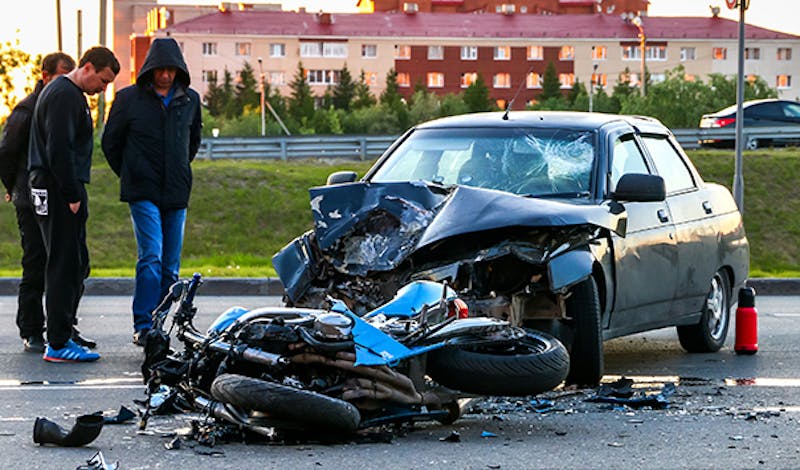
You will hear an adjuster say, “The bumper shows only scuffs, so the injury must be minor.” There is no law of biomechanics that says visible property damage correlates neatly with human injury. In fact, stiffer modern bumpers can transmit more force to occupants at low speeds because they do not deform easily.
When necessary, we pull event data recorder (EDR) information, review repair estimates for structural cues, or use expert analysis to explain occupant kinematics. Most cases do not need a full-blown reconstruction, and judges grow skeptical when lawyers turn fender-benders into science fairs. But targeted use of physics can neutralize the “no damage, no injury” trope and move an adjuster off a canned offer.
How comparative fault sneaks into small cases
In minor collisions, stories often conflict. A driver rolling through a stop at Silva Valley may insist the other car “came out of nowhere.” The other side claims a sudden brake. Surveillance footage is rare. Witnesses are polite neighbors, not neutral strangers.
California’s comparative fault rule allows damages to be reduced by your share of responsibility. In low-speed cases, a 10 to 20 percent apportionment shows up often. That slice can erase the value you fought to prove. The antidote is small, consistent facts. Photos that show paint transfers and angle of impact help. Early statements that place the vehicles in relation to a fixed object, like a center median or a specific storefront, matter. If the location has prior crash reports or known visibility issues, we use that context. The standard is not perfection, it is credibility.
Working with an EDH car accident attorney changes the frame
People hire a car accident lawyer for three reasons: clarity, leverage, and relief. Clarity comes from understanding the process, the timeline, and the realistic value bracket of your claim. Leverage comes from creating the record and pressure points that nudge an insurer to pay attention. Relief comes from having someone else handle the calls, the forms, and the back-and-forth so you can heal and work.
Local knowledge amplifies each. An EDH car accident attorney knows which urgent care centers document well, which imaging centers can schedule faster, and which orthopedic practices will see auto cases without endless delays. We also understand the rhythm of El Dorado County juries versus Sacramento County juries, and how venue affects settlement posture. That does not mean every case becomes a courtroom drama. It means the other side senses that we can take it there if needed, and that changes the math.
The settlement range that no one wants to admit
Clients ask for numbers. I resist early because the variables matter more than the averages, but ranges help set expectations. For minor-to-moderate soft tissue cases in this region with documented care, disrupted activities, and no permanent impairment, settlements often fall between low five figures and the mid five figures. Cases with objective findings on imaging, injections, or lasting work impact can move higher. If liability is contested or treatment is sporadic, the range shrinks. Policy limits cap everything. A driver with only $15,000 in liability coverage can choke a good case unless your underinsured motorist coverage fills the gap.
Those are not promises, just the reality I see repeatedly. The swing factor is how well we tell a grounded, consistent story with evidence that tracks your lived experience.
The two calls that change outcomes
If you do nothing else after a minor crash, do these two things:
- See a medical professional within 24 to 72 hours, even if symptoms seem manageable, and follow through on the plan you are given. Speak to a qualified car accident lawyer before you give a recorded statement to an insurer, including your own, so you understand your rights and how to preserve them.
Everything else flows from those steps. They do not guarantee a windfall. They create the conditions for a fair result.
What the day-to-day looks like once you hire counsel
Expect structure, not drama. We gather records, bills, and photos. We help coordinate care if you need referrals. We open claims with all relevant carriers and confirm coverage. We keep you off recorded statements unless strategic. Every few weeks, we check on your progress and adjust the plan. When you reach maximum medical improvement or a stable plateau, we assemble a demand package with medical summaries, wage documentation, and a damages narrative that makes sense to real people.
Negotiations can take anywhere from a few weeks to several months depending on carrier, complexity, and medical arc. If the offer range is unserious, we discuss filing suit. Filing does not guarantee trial. It often moves the file from an automated workflow to a human who can value nuance. Along the way, our job is to tell you what matters, what does not, and when patience pays.
When a “minor” case deserves litigation
Most small cases settle. Some should not, at least not early. Three red flags push me toward filing: a dismissive liability stance that ignores clear facts, an offer that disregards objective findings or valid wage loss, and an at-fault carrier running out the clock when a statute of limitations looms. In California, you typically have two years from the date of the crash to file suit for bodily injury, though shorter windows can apply for claims against public entities. Do not flirt with that deadline. A case that looks routine can gain seriousness fast if an insurer senses you will not file.
Healing first, but plan for the future
I have seen clients push through pain for months because they believe toughness helps the case. It does not. What helps is realistic recovery. Complete the physical therapy, do the home exercises, and take the time to let the body settle. At the same time, document the weeks you could not pick up your toddler without pain, the days you skipped your run around the lake, the hours you lost at work. Those details restore value later. They also give you a clearer sense of whether you are truly better or simply adapting.
If symptoms persist past 8 to 12 weeks despite conservative care, ask your provider about next steps. Sometimes the path is a brief course of guided injections. Sometimes it is targeted imaging to rule out something more serious. Sometimes it is acceptance that discomfort will wax and wane and you need strategies to manage it. A fair settlement reflects that reality, not an ideal.
The quiet ethics of minor injury practice
There is a responsibility to keep expectations grounded. I turn down cases when the facts do not support causation or the requested care overshoots what the body needs. I also push back when insurers hide behind software or stereotypes. Most files land somewhere in the middle, where prudence and persistence produce a fair result without theatrics.
Clients can help by being transparent, following medical advice, and telling the truth even when it complicates the story. The more you try to optimize a narrative, the less it resembles a life lived in EDH with kids’ sports, commutes, and the occasional cramped neck that suddenly became something worse.
A practical path forward
If you have read this far, you probably or someone you love is wrestling with a “minor” car crash that will not fade. You do not need to decide everything today. Take the next good step. Get checked by a clinician who will write what you say, not what a template suggests. Gather your photos and notes. Pull your auto policy to confirm coverages, especially UM/UIM and MedPay. Then have a short, focused conversation with a local car accident lawyer who handles these cases every week, not as a sideline.
What starts small does not have to spiral. With the right documentation, a clear medical arc, and measured advocacy, these cases resolve fairly more often than not. And when they do not, having an EDH car accident attorney who knows the terrain can make the difference between an insurer’s software calculation and an outcome that actually covers what you lost.